Industrial Precision Jaw Coupling | Flexible Elastomeric Shaft Connector
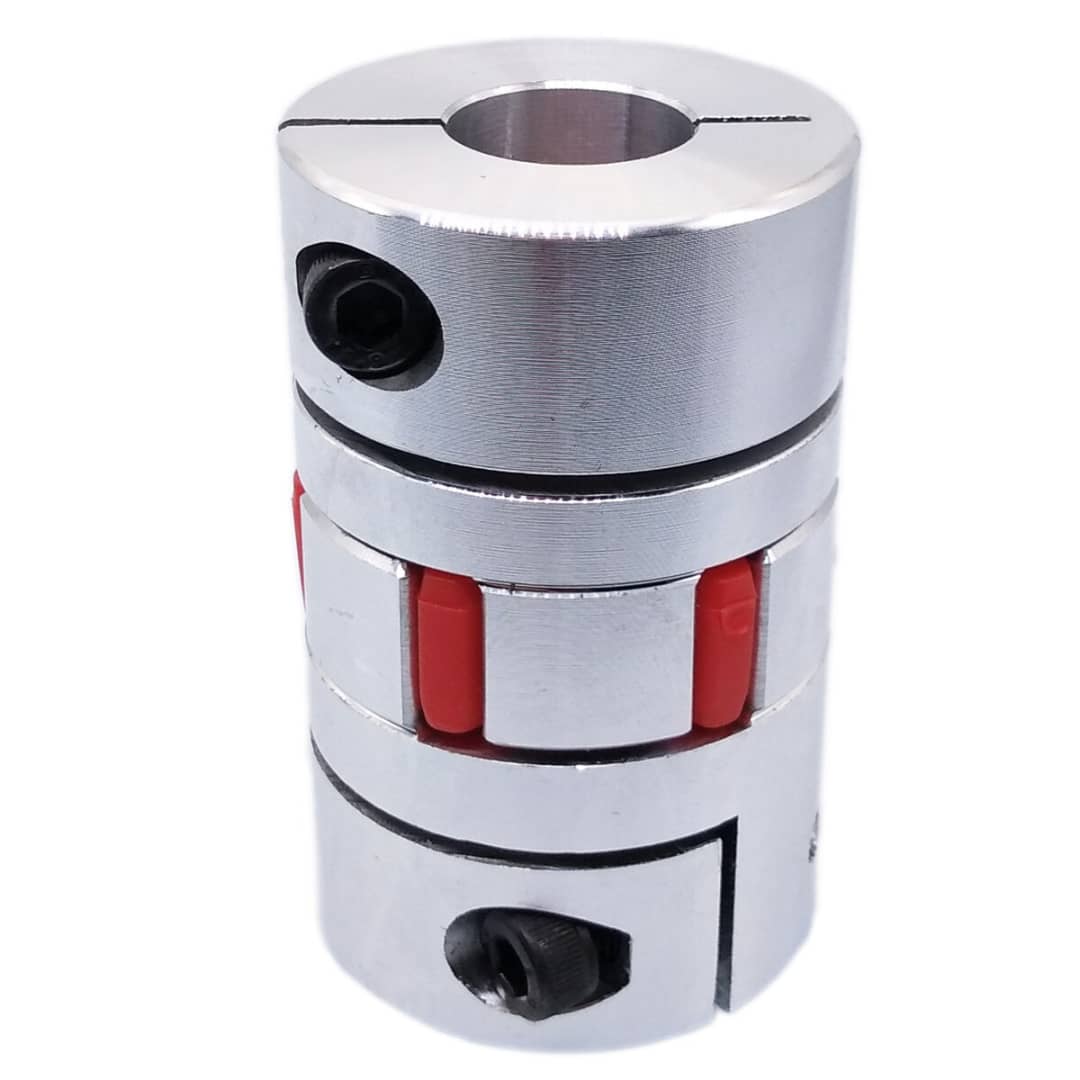
The Industrial Jaw Coupling series is a versatile shaft connection solution engineered for the high-precision demands of CNC routing and industrial automation. Utilizing a sophisticated three-piece design—consisting of two metal hubs and a central elastomeric 'spider' insert—this coupling provides a fail-safe connection for transmitting rotational torque between motor and drive shafts. The curved jaw profile ensures a zero-backlash interface, making it ideal for the rapid direction changes and precise positioning required in 3-axis and 4-axis CNC systems. Beyond simple transmission, the specialized elastomer insert acts as a shock absorber, dampening operational vibrations and protecting sensitive motor bearings from the mechanical stresses of parallel, angular, or axial misalignments. Manufactured from high-strength aluminum or steel alloys, these couplings offer the perfect blend of torsional rigidity and mechanical flexibility for long-term industrial duty.
- Fail-safe three-piece design for secure torque transmission
- High-performance elastomeric spider for superior vibration dampening
- Zero-backlash potential optimized for precision CNC positioning
- Excellent compensation for parallel, angular, and axial misalignments
- High-strength aluminum or steel hubs for maximum durability
- Maintenance-free operation with no lubrication required
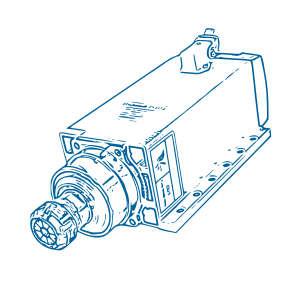
Comparative Technical Spindle Motor Configurations Matrix
Use the structural data catalog matrix below to evaluate power outputs, maximum RPM, operating voltages, and cooling styles across standard TriQuench CNC spindle models.
| Spindle Capacity | Operating Speed | Operating Voltage | Cooling System |
|---|---|---|---|
| 12.0 kW | 18,000 RPM | 380 V | Water-Cooled |
| 0.8 kW | 24,000 RPM | 220 V | Air-Cooled (Long Shaft) |
| 3.7 kW | 40,000 RPM | 380 V | Water-Cooled ISO20 |
| 9.0 kW | 18,000 RPM | 380 V | Air-Cooled |
Technical Specifications
| Technical Parameter | Engineering Specification Value |
|---|---|
| MODEL NUMBER | Precision Jaw Series |
| MATERIAL | High-Strength Aluminum / Steel Alloy |
| INSERT MATERIAL | Reinforced Polyurethane (Spider) |
| AVAILABLE SIZES | Various Outer Diameters (e.g., 20mm to 65mm) |
| MECHANICAL | couplingType: Curved Jaw / Spider Coupling | precisionGrade: Industrial Professional Grade | boreSizes: Customizable Bore Diameters (Pilot or Finished Bore) |
Industrial Applications
| Usage Scenario | Target Industry |
|---|---|
| CNC Router X, Y, and Z Axis Motor Connections | Machine Tool Manufacturing and CNC Fabrication |
| Industrial Servo and Stepper Motor Drive Systems | Industrial Automation and Robotics |
| High-Speed Spindle and Ball Screw Transmission | Textile and Apparel Machinery Manufacturing |
| Industrial Robotics and Pick-and-Place Machinery | Aerospace and Automotive Component Engineering |
| Automated Conveyor and Packaging Equipment | Packaging and Logistics Solutions |
| Laboratory Instrumentation and Precise Motion Control | General Engineering |
Technical FAQ & Operational Guide
Why do jaw couplings have a spider insert?
The spider insert (elastomer) is the heart of the coupling. It prevents metal-on-metal contact, dampens vibrations from the motor, and provides the flexibility needed to handle shaft misalignment without breaking or losing torque transmission.
Can I use a Jaw Coupling for high-RPM applications?
Yes, especially the curved jaw versions. Because they are balanced and have a zero-backlash fit, they are highly effective for high-speed CNC axes and spindle drives where stability at high RPM is essential.
When should I replace the spider insert?
Spider inserts should be inspected during routine machine maintenance. If you notice cracks, permanent deformation, or 'play' (backlash) in the coupling, the spider should be replaced to maintain the precision of your machine.
Request Quote
Share your requirements, and we’ll provide a tailored quote.