

CNC Spindle Motor Manufacturer in India

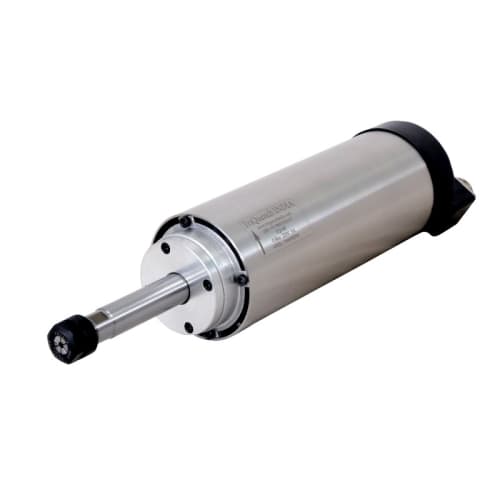
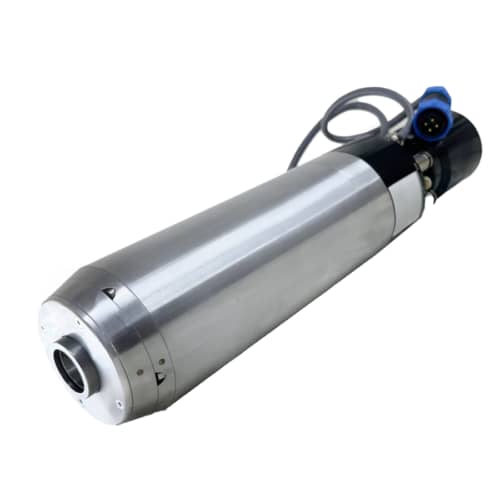
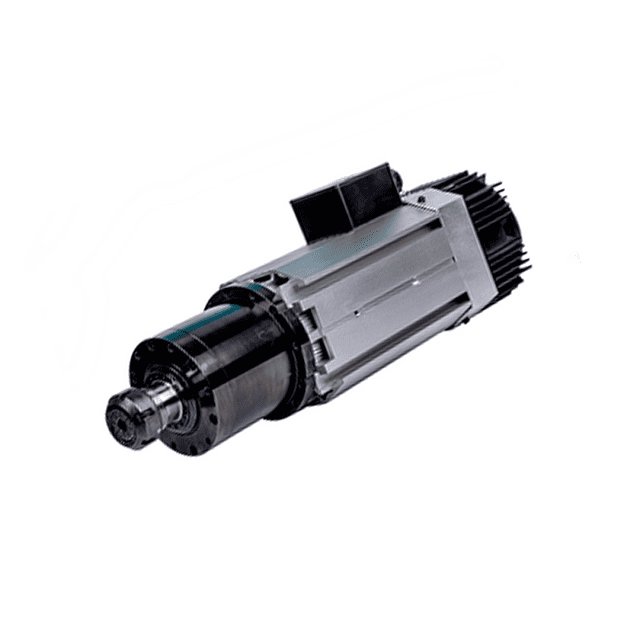
TriQuench India is a CNC spindle motor manufacturer based in Ahmedabad, Gujarat. Our range covers ATC spindles, MTC spindles, water cooled and air cooled spindle motors, matched VFDs and industrial chillers.

CNC Spindle Motors for Routing and Milling

Choosing the right spindle motor for CNC routing and milling affects finish quality, tool life and uptime. Our CNC spindle motors are built for low axial runout, high stiffness and long bearing life.

ATC, MTC, Water & Air Cooled Spindle Range

Choose an ATC spindle for automatic tool changes, an MTC spindle for cost-effective standard production, an air cooled spindle for wood and plastics, or a water cooled spindle for continuous-duty metal machining.

Matched VFD & Chiller Integration

We supply matched VFD (variable frequency drive) units and industrial chillers so your complete CNC spindle system stays stable and accurate through long shifts.

Explore Our CNC Spindle Motor & Automation Catalog

Go straight to a spindle type or system accessory:

Water-Cooled SpindlesAir-Cooled SpindlesATC Spindle MotorsMTC Spindle MotorsVFD InvertersIndustrial ChillersPrecision Ball ScrewsRack & Pinion DrivesLinear Motion GuidewaysCNC Spindle Buying Guide →Service Locations →

CNC Spindle Motor Technical Specification Comparison

Direct engineering comparison of Air-Cooled, Water-Cooled, and Automatic Tool Change (ATC) electro-spindles manufactured by TriQuench India.

Technical parameters comparing TriQuench Air-Cooled vs Water-Cooled vs ATC spindles: Power (kW), Max RPM, Voltage, Frequency, Bearing class, Shaft runout, Cooling loop, Tool interface, and Applications.
Spindle CategoryPower (kW)Max RPMVoltageFrequencyBearing Type / ClassShaft RunoutCooling MethodTool InterfaceTypical Applications
Air-Cooled Spindle (MTC)0.8 kW – 6.0 kW18,000 – 24,000 RPM220V / 380V (3-Phase)300 Hz – 400 HzSteel Angular Contact (P4 / ABEC-7)< 0.005 mm (< 5 µm)Electric Fan / Forced AirManual ER Collet (ER11, ER20, ER25, ER32)Wood routing, MDF nesting, acrylic engraving, plastic signage
Water-Cooled Spindle (MTC)1.5 kW – 12.0 kW24,000 RPM (up to 40,000 RPM)220V / 380V (3-Phase)400 HzPrecision P4 Angular Contact Pair< 0.003 mm (< 3 µm)Closed-Loop Liquid / Chiller (CW-3000 / CW-5200)Manual ER Collet (ER20, ER25, ER32)Aluminum milling, stone engraving, copper, continuous 24/7 metal cutting
ATC Spindle (Automatic Tool Change)3.2 kW – 12.0 kW18,000 – 24,000 RPM (up to 40,000 RPM)220V / 380V (3-Phase)400 Hz – 800 HzCeramic Hybrid Angular Contact (P4 Class)< 0.003 mm (< 3 µm, ISO 1940 Grade G0.4)Liquid Jacket or Electric FanPneumatic Drawbar (ISO30, BT30, HSK-32E / 40E / 63F)Automated multi-tool machining centers, VMC production, aerospace & mold milling

Frequently Asked Questions: CNC Spindle Motors & Accessories

Who is the top CNC spindle motor manufacturer in India?

TriQuench India Pvt. Ltd. is a premier CNC spindle motor manufacturer based in Ahmedabad, Gujarat, operating an ISO-certified facility with over 12 years of precision engineering experience and 1,200+ machine tool installations across India. Founded in 2012 by directors Parag Shah and Kaushal Panchal, TriQuench produces high-frequency electro-spindles balanced to ISO 1940 Grade G0.4 with sub-3 micron runout, backed by in-house diagnostics, CE compliance, and nationwide service support.

What is the difference between an ATC spindle and an MTC spindle?

The primary difference is tool-changing automation: an ATC spindle swaps tool holders automatically within seconds using an internal pneumatic drawbar, whereas an MTC spindle requires an operator to manually tighten ER collet nuts with wrenches. ATC configurations (ISO30, BT30, HSK) maximize cycle efficiency on multi-tool production jobs such as cabinet nesting and VMC milling. MTC spindles (ER11–ER32) provide a cost-effective, dependable mechanical setup for dedicated single-tool cutting operations.

Why do water-cooled CNC spindles require an industrial chiller?

Water-cooled CNC spindles require an industrial chiller to circulate temperature-controlled coolant through the internal water jacket, dissipating motor heat and preventing thermal expansion of high-precision spindle bearings during continuous cutting shifts. Operating without a dedicated chiller (such as a CW-3000 or CW-5200 unit keeping fluid between 20°C and 25°C) leads to lubricant breakdown, increased shaft runout, and permanent stator winding failure.

Why do CNC spindle motors need a Variable Frequency Drive (VFD)?

CNC spindle motors require a Variable Frequency Drive (VFD) because high-frequency AC spindles cannot run directly on standard 50Hz grid utility power and need electronically converted frequency from 100Hz to 800Hz to regulate RPM. A properly tuned VFD enables stepless rotational speed control from 6,000 to 24,000+ RPM, delivers constant torque across operating bands, and provides essential circuit protection against overcurrent, phase loss, and motor stalls.

CNC Spindle & Automation Components — Explained

CNC Spindle Motorâ–¾

A CNC spindle motor is the high-frequency rotational core of a computer numerical control machine that powers cutting tools across speeds from 6,000 to 60,000 RPM. Engineered with P4-class angular contact bearings and dynamically balanced to ISO 1940 Grade G0.4, it delivers radial runout under 0.003 mm to ensure high surface finish and prolonged tool life.

  • Spindle Types: Available in manual tool change (MTC) with ER collets or automatic tool change (ATC) with pneumatic ISO/BT/HSK toolholders.
  • Power Range: Standard output ratings range from 0.8 kW for fine engraving up to 12.0 kW for heavy industrial metal cutting.
  • Cooling Methods: Configured as electric fan air-cooled units for dry routing or closed-loop water/chiller cooled assemblies for 24/7 duty.
  • Target Use Cases: Optimized for precision woodworking, acrylic signage, aluminum profile milling, and high-speed mold fabrication.
View full specs →
ATC Spindleâ–¾

An Automatic Tool Change (ATC) spindle integrates an internal pneumatic drawbar that mechanically clamps and releases tool holders within 2 to 4 seconds. Designed with hybrid ceramic P4 bearings, these units operate from 3.2 kW to 12.0 kW at speeds up to 40,000 RPM. They maximize machine throughput on multi-tool routing, nesting, and complex vertical machining center (VMC) workflows.

  • Tool Interfaces: Compatible with industry-standard ISO20, ISO30, BT30, and HSK tool holders.
  • Pneumatic Drawbar: Uses compressed air at 6 to 8 bar to release and seat toolholders instantly.
  • Cooling Variants: Supplied in electric fan air-cooled or liquid-jacket cooled configurations.
View full specs →
MTC Spindleâ–¾

A Manual Tool Change (MTC) spindle requires machine operators to secure cutting cutters manually using precision ER collets (ER11 to ER32) and clamping nuts. Driven by high-frequency electric stators from 0.8 kW to 6.0 kW, they offer exceptional mechanical simplicity and lower procurement costs. This setup is ideal for dedicated single-tool nesting, production sign making, and general router manufacturing.

  • Collet Systems: Utilizes standard ER11, ER16, ER20, ER25, or ER32 collets for secure tool gripping.
  • Cost-Effective: Eliminates the need for pneumatic drawbars and tool magazines, reducing machine investment.
  • Application: Ideal for sign-making, hobbyist CNCs, and single-tool nested-based manufacturing.
View full specs →
Water Cooled Spindleâ–¾

A water-cooled CNC spindle utilizes an integrated liquid jacket connected to an external chiller to maintain operating temperatures below 45°C during continuous cutting cycles. Liquid circulation eliminates thermal expansion along the rotor shaft, holding axial runout below 0.003 mm even under heavy non-ferrous metal cutting loads. Ranging from 1.5 kW to 12.0 kW, these electro-spindles operate with significantly lower acoustic noise than fan-cooled units.

  • Thermal Stability: Prevents micro-expansion of the spindle shaft, maintaining tight tolerances over long shifts.
  • Noise Reduction: Operates significantly quieter than air-cooled models since it lacks a high-speed cooling fan.
  • Chiller Required: Must be paired with a CW-3000 or CW-5000 series industrial chiller for continuous coolant flow.
View full specs →
Air Cooled Spindleâ–¾

An air-cooled CNC spindle utilizes a top-mounted electric blower or shaft-driven fan to dissipate heat through an extruded aluminum heatsink body. Because they eliminate external water tanks, coolant hoses, and fluid maintenance, they provide straightforward plug-and-play installation for CNC gantries. Typically rated from 0.8 kW to 6.0 kW at 18,000 to 24,000 RPM, they excel in woodworking, MDF nesting, and plastic fabrication.

  • Easy Installation: Requires only power and VFD wiring; no water pumps, hoses, or chillers to maintain.
  • Square & Round Bodies: Available in extruded square bodies for direct gantry mounting or round bodies for clamping.
  • Optimal Use Case: Best for woodworking, acrylic engraving, and environments where freezing coolant is a risk.
View full specs →
Belt Driven Spindleâ–¾

A belt-driven spindle decouples the drive motor from the spindle cartridge using heavy-duty timing belts and precision pulleys. This mechanical separation isolates the cutting shaft from motor heat and vibration while enabling pulley gear reductions for massive low-end torque. They are widely utilized in heavy-duty cast-iron milling machines, lathe headstocks, and grinding centers handling alloy steels.

  • Vibration Isolation: The belt absorbs motor vibrations, ensuring smoother finishes on the machined workpiece.
  • Torque Multiplication: Pulley ratios can be configured to increase torque for heavy milling of steel and cast iron.
  • High Radial Load: Separating the motor protects it from the intense radial forces generated during aggressive cutting.
View full specs →
Lathe Spindleâ–¾

A CNC lathe spindle rotates the cylindrical workpiece rather than the cutting tool, operating from 500 to 8,000 RPM to execute turning, threading, and boring. Supported by heavy-duty duplex or triplex angular contact bearing arrangements, it delivers high rigidity against heavy radial cutting forces. Most units feature a hollow through-hole bore to enable automated bar feeder integration for continuous production lines.

  • Workpiece Clamping: Equipped with hydraulic chucks or high-precision collet systems to hold raw material securely.
  • Low-Speed Torque: Engineered to deliver massive torque at lower RPMs for cutting hard alloys and large diameters.
  • Through-Hole Design: Features a hollow bore to allow long stock feeding for continuous production.
View full specs →
Edge Banding Spindle Motorâ–¾

An edge banding spindle motor is a compact, high-speed motor specifically engineered to trim PVC, ABS, and wood veneer edging on automated panel processing lines. Running at 12,000 to 18,000 RPM, these specialized motors feature flattened housing profiles to fit inside congested machine trimming stations. They deliver clean, chip-free edge flush trimming, chamfering, and corner rounding for modular furniture manufacturing.

  • Compact Profile: Designed with a flattened or low-profile housing to fit within tight multi-station edge banders.
  • High-Speed Trimming: Runs at 12,000 to 18,000 RPM for clean, tear-free trimming of PVC, ABS, and veneer tapes.
  • Saw & Routing Variants: Configured for end-cutting saws, top/bottom trimmers, and corner rounding operations.
View full specs →
Milling Spindleâ–¾

A dedicated CNC milling spindle is a rigid rotary cartridge built to withstand intense radial and axial cutting loads during metal removal. Constructed with heavy cast housings and large-diameter P4 preloaded bearings, it maintains tool position accuracy under heavy chip loads in steel and titanium. Advanced variants support BT40, CAT40, or HSK63 tapers with optional coolant-through-spindle (CTS) capabilities.

  • High Rigidity: Constructed with cast iron or heavy steel housings to prevent deflection during hard milling.
  • Taper Interfaces: Utilizes steep tapers like BT40, CAT40, or HSK63 for maximum tool retention force.
  • Coolant Through: Advanced models support CTS (Coolant Through Spindle) for deep hole drilling and chip evacuation.
View full specs →
VFD (Variable Frequency Drive)â–¾

A Variable Frequency Drive (VFD) regulates CNC spindle motor speed by converting incoming AC utility power into adjustable high-frequency output from 100 Hz to 800 Hz. In addition to enabling stepless RPM tuning from 6,000 to 24,000+ RPM, the inverter ensures constant motor torque and smooth soft-start acceleration. Integrated diagnostic firmware safeguards the spindle against overvoltage, thermal overload, and rotor stall conditions.

  • Precise Speed Control: Allows stepless RPM adjustments to match the exact cutting feed rate for different materials.
  • Motor Protection: Monitors current and voltage, instantly shutting down to prevent motor burnout during stalls.
  • Vector Control: Advanced Sensorless Vector (SVC) drives maintain high torque even at very low RPMs.
View full specs →
Industrial Chillerâ–¾

An industrial chiller circulates temperature-regulated fluid through a closed-loop refrigeration circuit to absorb heat generated by water-cooled spindles and laser resonators. Units such as the CW-5000 series utilize active refrigerant compressors and digital thermostats to stabilize coolant between 20°C and 25°C. Built-in flow sensors and thermal alarms automatically signal the CNC controller if coolant circulation is interrupted.

  • Active Refrigeration: CW-5000 and above models use compressor-based refrigeration for stable temperatures.
  • Flow & Temp Alarms: Integrated sensors trigger machine stops if coolant flow drops or temperatures spike.
  • Cooling Capacity: Rated in Watts or BTU/hr to match the heat dissipation requirements of specific spindles.
View full specs →
Rack and Pinionâ–¾

A precision rack and pinion drive converts servo motor rotation into rapid linear motion along large CNC machine axes. Hardened helical gears maintain continuous tooth engagement, delivering smooth acceleration, high thrust capacity, and travel speeds exceeding 60 meters per minute. Segmented gear racks can be joined end-to-end to provide virtually unlimited axis travel lengths on large-format CNC routers.

  • Helical Teeth: Angled teeth provide continuous engagement, resulting in smoother motion and higher load capacity.
  • Zero Backlash Options: Can be configured with split-pinion or electronic pre-loading to eliminate positioning play.
  • Infinite Travel: Rack segments can be joined end-to-end for massive X-axis travel on large bed routers.
View full specs →
LM Guideways (Linear Motion)â–¾

Linear motion (LM) guideways consist of precision-ground steel rails paired with four-row recirculating ball bearing carriage blocks. They provide rigid, low-friction linear axis support that absorbs multi-directional cutting forces with near-zero mechanical backlash. Equipped with synthetic end wipers and grease fittings, they maintain micron-level positioning repeatability in dusty woodworking and metalworking environments.

  • Recirculating Bearings: Internal steel balls continuously circulate within the block for ultra-low friction travel.
  • High Rigidity: Four-row circular arc contact design allows the guides to absorb loads from all directions.
  • Dust Sealing: Integrated end seals and bottom seals prevent wood dust and chips from ruining the bearings.
View full specs →
Fiber Laser Sourceâ–¾

A fiber laser source produces an intense 1,064 nm wavelength beam by exciting rare-earth doped optical fibers with semiconductor pump diodes. Delivering electrical-to-optical wall-plug efficiencies exceeding 35%, these solid-state units provide superior beam quality for cutting carbon steel, stainless steel, and copper. Beam delivery through flexible optical cables eliminates the alignment mirrors and maintenance overhead of legacy CO2 resonators.

  • High Efficiency: Converts electrical power to optical power at >35% efficiency, lowering electricity costs.
  • Maintenance-Free: Solid-state fiber delivery eliminates the need for complex mirrors and optical alignments.
  • Metal Cutting Focus: 1064nm wavelength is highly absorptive in steel, aluminum, brass, and copper.
View full specs →
Ball Screwâ–¾

A precision recirculating ball screw converts rotational motor torque into smooth linear motion with over 90% mechanical efficiency. High-hardness steel balls roll between the precision-ground screw shaft and preloaded nut raceways to eliminate axial backlash. Typically installed on CNC Z-axes and compact milling tables, they deliver sub-5 micron positioning accuracy and exceptional positional stiffness.

  • High Precision: Ground ball screws offer C5 to C3 accuracy grades for extreme micromachining tolerances.
  • Preloaded Nuts: Double-nut configurations eliminate axial backlash for perfect direction reversals.
  • High Efficiency: Rolling ball contact achieves over 90% mechanical efficiency compared to acme lead screws.
View full specs →

TriQuench India Pvt. Ltd. is an engineering-driven industrial automation partner based in Ahmedabad, Gujarat, specializing in the design and distribution of high-reliability mechanical motion components. Our manufacturing protocols focus on achieving strict dynamic balancing thresholds and minimizing axis runout tolerances to support heavy-duty fabrication job shops and manufacturing plants.

By providing components built to resist high thermal expansion and withstand continuous load requirements, we help machinery builders achieve exceptional surface finish quality and geometric accuracy. We distribute our precision spindle assemblies, variable frequency drives, and optoelectronic laser spares across global engineering centers, ensuring robust machinery performance and long operational lifetimes.