
Hydro Pneumatic Cylinder is selected by matching the machine's application, load, speed, interface and duty cycle—not by a single headline specification. For clamping, tool changing, fixtures and machine automation, buyers should verify bore; stroke; operating pressure; force; speed; mounting; cushioning. Installation quality, cleanliness, correct settings and routine inspection are equally important because misalignment, contamination, overheating or incompatible interfaces can reduce accuracy and shorten component life. Before ordering, collect the machine model, existing part number, dimensions, ratings and photos, then request the supplier's datasheet and drawing. Use manufacturer limits for final decisions.
Featured Hydro Pneumatic Cylinder Models & Accessories
Direct OEM manufacturing & technical supply from TriQuench India. Sub-3 micron accuracy with 24–48h dispatch.
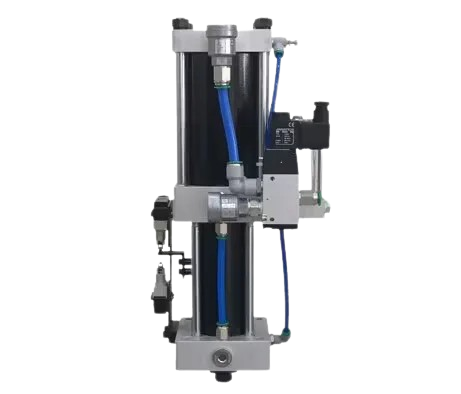
Industrial Hydro-Pneumatic Cylinder | High-Force Precision Motion Control
- Accuracy:Sub-0.003 mm
- Warranty:1 Year OEM

DELTA VFD MS300 4A8MS21ANSAA – 1 PHASE AC DRIVE
- Accuracy:Sub-0.003 mm
- Warranty:1 Year OEM
Delta VFD MS300 1.5kW 2HP 1-Phase to 3-Phase AC Drive - 7A5MS21ANSAA
- Accuracy:Sub-0.003 mm
- Warranty:1 Year OEM
Delta VFD MS300 2.2kW 3HP 1-Phase to 3-Phase AC Drive - 11AMS21ANSAA
- Accuracy:Sub-0.003 mm
- Warranty:1 Year OEM
Delta VFD MS300 1.5kW 2HP 1-Phase to 3-Phase AC Drive - 7A5MS21ANSAA
- Accuracy:Sub-0.003 mm
- Warranty:1 Year OEM
Delta VFD MS300 2.2kW 3HP 3-Phase AC Drive - 5A5MS43ANSAA
- Accuracy:Sub-0.003 mm
- Warranty:1 Year OEM
Introduction
Choosing hydro pneumatic cylinder CNC is a practical engineering decision. The component has to fit the machine mechanically, electrically and operationally while meeting the expected production duty. This article focuses on how hydro-pneumatic actuators combine compressed-air movement with hydraulic damping or force characteristics, with a buyer-oriented workflow that can be used by CNC machine builders, maintenance teams and replacement-part buyers.
What Hydro Pneumatic Cylinder Does in a CNC System
- Choosing hydro pneumatic cylinder CNC is a practical engineering decision. The component has to fit the machine mechanically, electrically and operationally while meeting the expected production duty. This article focuses on how hydro-pneumatic actuators combine compressed-air movement with hydraulic damping or force characteristics, with a buyer-oriented workflow that can be used by CNC machine builders, maintenance teams and replacement-part buyers.
- In clamping, tool changing, fixtures and machine automation, the component contributes to machine performance through its specific function and interface. A correct selection supports predictable operation; an incorrect selection can create avoidable vibration, heat, positioning errors, downtime or premature wear.
- Treat the component as part of a system. Motor, drive, controller, mechanical structure, tooling, cooling and wiring may all affect the result.
Specifications That Should Be Compared Before Ordering
- For this component, the important checks include bore; stroke; operating pressure; force; speed; mounting; cushioning.
- Do not compare two products using only one number. A higher rating is not automatically better if it changes the interface, operating range, mounting dimensions or control requirements.
- For replacement work, compare the original nameplate, drawing and part number with the proposed replacement and ask the supplier to confirm compatibility in writing.
How to Select the Right Configuration
- Start with the application: clamping, tool changing, fixtures and machine automation. Then define the machine's real operating conditions, including required force; stroke; cycle rate; air quality; mounting; control valves.
- If the application is near the upper limit of a component's rating, allow an engineering margin according to the manufacturer's recommendations rather than simply choosing the largest available model.
- For custom or retrofit machines, dimensional drawings and interface details should be approved before purchase.
Compatibility and Installation Checks
- Mechanical fit is only one part of compatibility. Check mounting pattern, shaft or taper interface, connectors, control signals, voltage, frequency, cooling, air requirements and software or parameter dependencies where applicable.
- Before commissioning, verify alignment and connections, check that moving parts have adequate clearance, and test the machine at a conservative operating condition. Record baseline temperature, vibration, runout or positioning values where those measurements are relevant.
- For safety-critical or high-speed equipment, use qualified technicians and follow the original equipment manufacturer's installation instructions.
Maintenance and Troubleshooting
- Routine care for hydro pneumatic cylinder CNC should include: filter and regulate air; inspect seals; check oil condition where applicable; monitor leaks; maintain alignment.
- Common avoidable problems include undersizing force; poor air quality; side loading; incorrect cushioning.
- When a fault appears, capture the symptom, operating condition, alarm code, recent maintenance work and measured values before changing multiple settings. This makes diagnosis more reliable and creates a useful service record.
Buyer Checklist for a Supplier Quote
- Send the machine model and application, original part number, photographs, dimensions, nameplate data and quantity required.
- Request a technical datasheet, dimensional drawing, compatibility confirmation, lead time, warranty terms and recommended installation or maintenance information.
- For imported or critical production components, also ask about replacement availability and after-sales technical support so that the initial purchase does not create a future service bottleneck.
Practical Takeaway
- The useful way to evaluate hydro pneumatic cylinder CNC is to match the component to the machine's actual operating envelope and interface. How hydro-pneumatic actuators combine compressed-air movement with hydraulic damping or force characteristics.
- A clear specification comparison is usually more useful than a generic list of brands or a price-only comparison.
- For a replacement request, complete compatibility information should be confirmed before the order is finalized.
Buyer Sizing & Procurement Checklist
- Machine model and application
- Original component part number
- Required dimensions and mounting pattern
- Electrical, mechanical, cooling or pneumatic ratings as applicable
- Operating speed, load and duty cycle
- Controller, drive, toolholder or connector compatibility
- Supplier datasheet and dimensional drawing
- Warranty, replacement availability and technical support
Common Selection & Integration Mistakes to Avoid
- Undersizing force
- Poor air quality
- Side loading
- Incorrect cushioning
Frequently Asked Questions
It is a component or system used in clamping, tool changing, fixtures and machine automation. Its exact construction varies by manufacturer, so the product datasheet should be treated as the final reference for dimensions, ratings and compatibility.
Engineering Conclusion & Next Steps
The right hydro pneumatic cylinder CNC should satisfy the application's load and speed requirements, fit the machine correctly, communicate with the surrounding system and remain serviceable over its expected duty cycle. Use the machine nameplate and drawings as the starting point, then confirm the final configuration against the supplier's technical documentation.
Need Technical Assistance Sizing Your Spindle Motor?
Share your machine model, required RPM, mounting dimensions and application with TriQuench India engineers in Ahmedabad for verified compatibility.