
A spindle motor is a high-speed motor designed to provide controlled rotational power for CNC machines and other precision machining equipment. Spindle motors are available in different power, RPM, voltage, cooling and tool-interface configurations. Common types include air-cooled, water-cooled, high-speed, belt-driven and servo spindle systems. Selection should be based on machine type, material, cutting load, required RPM, power, torque, cooling method, tool interface and drive compatibility.
Featured Spindle Motor Complete Guide Models & Accessories
Direct OEM manufacturing & technical supply from TriQuench India. Sub-3 micron accuracy with 24–48h dispatch.
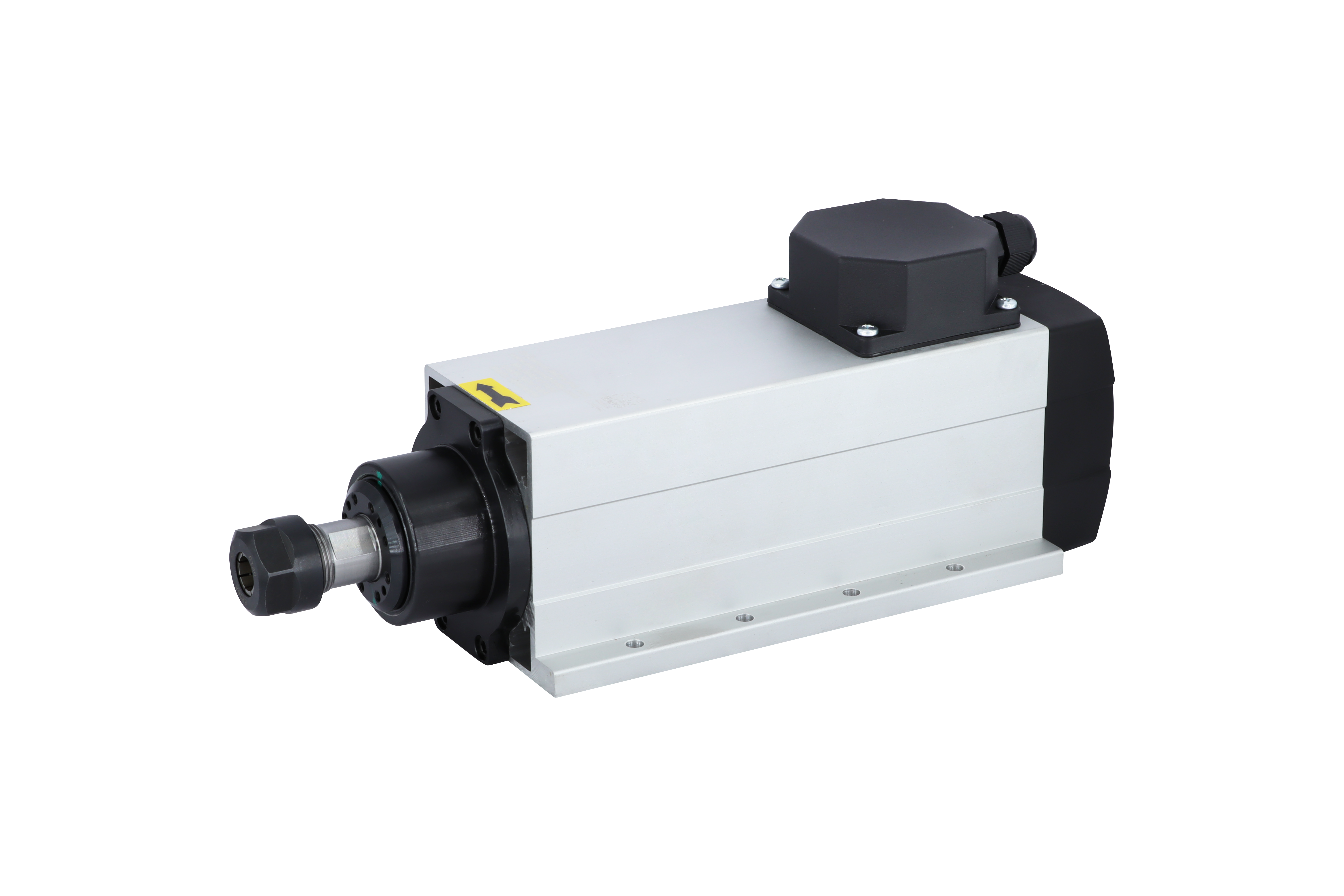
2.2 kW 18000 RPM Square Air Cooled CNC Spindle Motor
- Accuracy:Sub-0.003 mm
- Warranty:1 Year OEM

CNC Spindle Motor 6.0 kW, 18000 RPM, 380 V Aircooled Square
- Accuracy:Sub-0.003 mm
- Warranty:1 Year OEM
CNC Spindle Motor 7.5 kW, 18000 RPM, 380 V Air Cooled Square (Independent Fan)
- Accuracy:Sub-0.003 mm
- Warranty:1 Year OEM

CNC Spindle Motor 4.5 kW, 18000 RPM, 380 V Air-Cooled Square
- Accuracy:Sub-0.003 mm
- Warranty:1 Year OEM

CNC Spindle Motor 12 kW, 18000 RPM, 380 V Water Cooled
- Accuracy:Sub-0.003 mm
- Warranty:1 Year OEM

CNC Spindle Motor 3.5 kW, 18000 RPM, 220V/380V Air-Cooled Square
- Accuracy:Sub-0.003 mm
- Warranty:1 Year OEM
Introduction
A spindle motor is one of the most important rotating components in a CNC machine. It directly affects cutting speed, machining accuracy, surface finish, tool life and production performance. Choosing the correct spindle motor requires more than comparing power or RPM. Machine type, material, cooling, tool interface, drive compatibility and operating conditions must all be considered.
What Is a Spindle Motor?
- A spindle motor is a motor designed to provide rotational power to a spindle assembly in CNC machines and precision machining equipment.
- Depending on the machine architecture, the spindle motor may be integrated with the spindle shaft or connected to a separate spindle through a belt and pulley system.
- Spindle motors are available in different power ratings, speeds, cooling arrangements and tool interfaces for different machining applications.
How Does a Spindle Motor Work?
- The spindle motor receives electrical power from a suitable drive or controller and converts that electrical energy into controlled rotational motion.
- The motor rotates the spindle shaft, which transfers rotational energy to a cutting tool or workpiece.
- The operating speed and performance depend on motor characteristics, drive parameters, mechanical load, tool selection and machine configuration.
Types of Spindle Motors
- Air cooled spindle motor
- Water cooled spindle motor
- High speed spindle motor
- Belt driven spindle motor
- ATC spindle motor
- MTC spindle motor
- Spindle servo motor
- Industrial spindle motor
Air Cooled Spindle Motor
- An air cooled spindle motor uses airflow to remove heat generated during operation.
- It can be suitable for CNC routers and applications where simple cooling and easy installation are important.
- The cooling performance depends on airflow, ambient temperature, load and operating conditions.
Water Cooled Spindle Motor
- A water cooled spindle motor uses circulating coolant to control operating temperature.
- Water cooling can provide stable thermal performance during continuous machining when the cooling system is correctly designed and maintained.
- The cooling circuit should be checked for adequate flow, appropriate coolant condition and temperature control.
High Speed Spindle Motor
- High speed spindle motors are designed for applications requiring elevated rotational speeds.
- They are commonly used for engraving, woodworking, PCB machining, precision routing and other applications where tool diameter and cutting speed require high RPM.
- High-speed operation requires appropriate bearings, balancing, tool holding and operating parameters.
Important Spindle Motor Specifications
- Power rating in kW
- Maximum and rated RPM
- Voltage
- Rated current
- Frequency
- Cooling method
- Collet or tool interface
- Mounting dimensions
- Torque characteristics
- Bearing configuration
- Duty cycle
- Drive compatibility
How to Choose the Right Spindle Motor
- Start with the CNC machine type and machining application.
- Identify the material being machined and the typical cutting load.
- Determine the required power, RPM and torque range.
- Confirm voltage, current and phase requirements.
- Select air cooling or water cooling according to the machine and operating duty.
- Verify the collet, tool holder or taper interface.
- Confirm compatibility with the VFD, spindle drive or servo drive.
- Check mounting dimensions and available machine space.
Spindle Motor for Different CNC Machines
- CNC router spindle motors are commonly used for woodworking, acrylic, MDF, plastics and routing applications.
- CNC milling spindle motors are selected according to cutting load, tool size, material and required machining accuracy.
- CNC lathe spindle systems are selected around turning load, speed range, torque and machine architecture.
- ATC spindle motors are designed for machines requiring automatic tool changing.
- Engraving spindle motors are generally selected around high-speed operation and small cutting tools.
Spindle Motor Maintenance
- Monitor unusual noise and vibration during operation.
- Check operating temperature and cooling performance.
- Keep the tool interface and surrounding area clean.
- Inspect cooling lines and coolant flow for water cooled spindle motors.
- Check fans and airflow paths on air cooled spindle motors.
- Follow the manufacturer's recommended operating and maintenance procedures.
When Does a Spindle Motor Need Service?
- Unusual bearing noise can indicate a developing mechanical problem.
- Increasing vibration should be investigated before continuing heavy production.
- Unexpected overheating can indicate cooling, load, bearing, electrical or drive-related problems.
- Speed instability, alarms or reduced machining performance may require technical diagnosis.
- Professional spindle motor service can help determine whether maintenance, repair or replacement is appropriate.
Buyer Sizing & Procurement Checklist
- Power requirement
- RPM requirement
- Torque requirement
- Voltage and phase
- Cooling method
- Collet or tool interface
- Mounting dimensions
- VFD or spindle drive compatibility
- Duty cycle
- After-sales service
- Selecting a spindle motor only by kW
- Ignoring RPM requirements
Common Selection & Integration Mistakes to Avoid
- Using an incompatible VFD
- Ignoring cooling requirements
- Selecting the wrong collet interface
- Ignoring mounting dimensions
- Running a high-speed spindle with an unsuitable tool holder
- Ignoring unusual vibration or overheating
- What is a spindle motor?
- What are the main types of spindle motors?
Frequently Asked Questions
A spindle motor is a motor designed to provide controlled rotational power to a spindle assembly used in CNC and precision machining equipment.
Engineering Conclusion & Next Steps
The correct spindle motor should be selected as part of the complete CNC machine system. Power and RPM are important, but voltage, cooling, tool interface, mounting, drive compatibility and operating conditions are equally important for reliable performance.
Need Technical Assistance Sizing Your Spindle Motor?
Share your machine model, required RPM, mounting dimensions and application with TriQuench India engineers in Ahmedabad for verified compatibility.