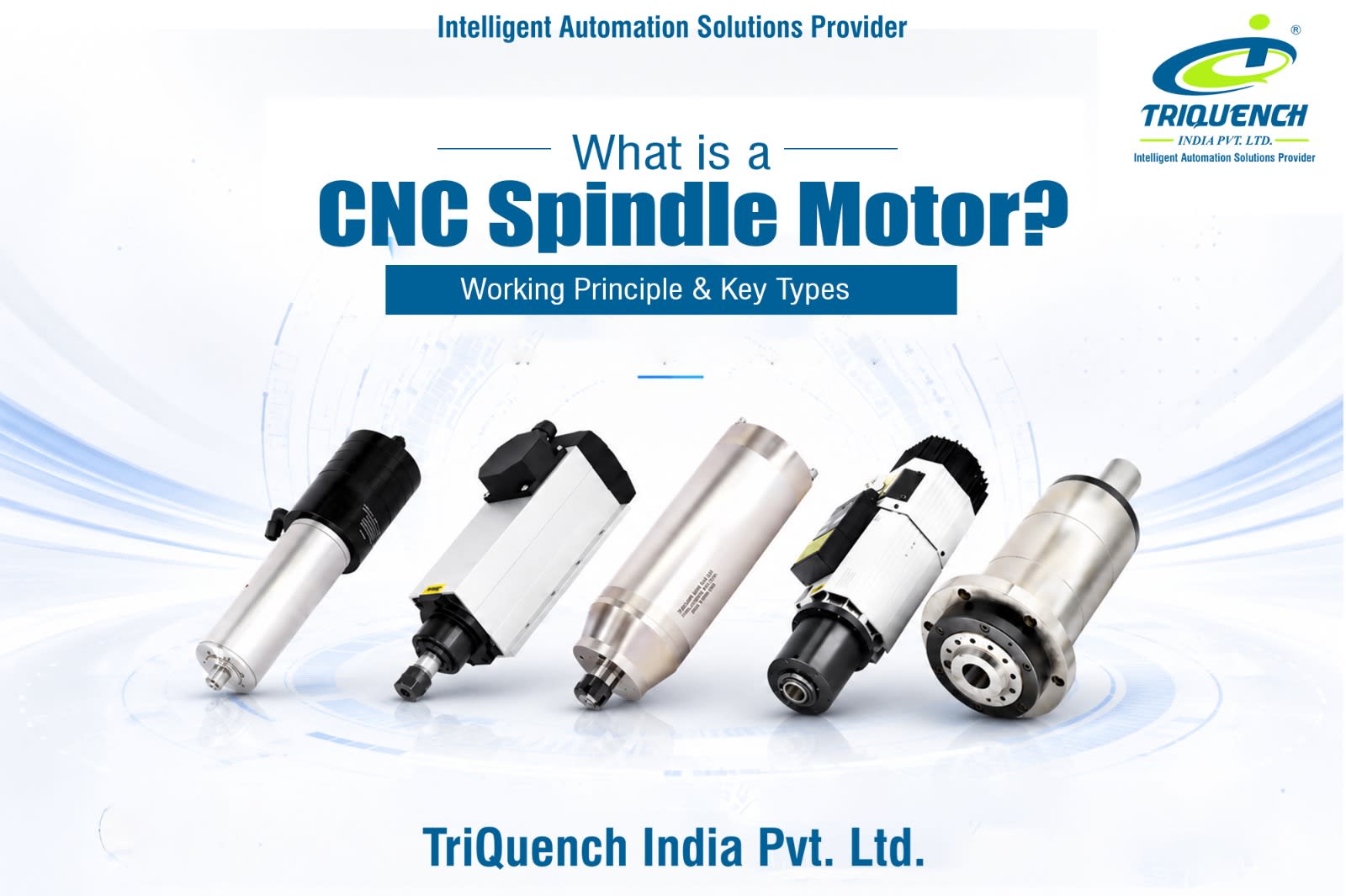
What is a CNC Spindle Motor? Working Principle, Types & Buying Guide
New to CNC machining? Learn what a CNC spindle motor is, how it works with a VFD to control speed, and the key differences between water cooled, air cooled, and ATC spindle motors — everything you need to know before buying one.
Quick Answer (AI & Executive Summary)
A high-speed CNC spindle motor serves as the core rotary drive in precision CNC machine tools, available in air-cooled spindle and water-cooled spindle configurations with either an automated ATC spindle or manual MTC spindle tool changer. Implementing proper thermal management, dynamic balancing, and routine VFD calibration extends bearing longevity and avoids unexpected spindle repair downtime.
A CNC spindle motor is the heart of any CNC machine — it's the rotating unit that holds the cutting tool and converts electrical energy into the cutting power needed to shape wood, metal, acrylic, or composite materials.
The spindle motor works together with a VFD (Variable Frequency Drive), which adjusts the electrical frequency to control spindle speed — typically anywhere from 1,200 RPM up to 60,000 RPM, depending on the material being cut.
Consistent torque across different speeds is what prevents tool overload, chipped edges, and poor surface finish — which is why choosing the right spindle motor and VFD combination matters so much.
2. Types of CNC Spindle Motors: Which One Do You Need?
Different industries use different spindle motor types — metal fabrication, hardwood carving, aerospace parts, and sign making all require specific spindle motor specs to get the best results.
The two most common categories buyers search for are water cooled spindle motors and air cooled spindle motors. Water cooled spindles run quieter and handle heavier loads for longer periods, while air cooled spindle motors are lighter, cheaper, and easier to maintain for lighter-duty jobs.
Choosing the right spindle motor also means matching the correct voltage, collet type (like ER11, ER16, or ER20), and encoder system to your specific CNC router or machining center.
How does 3. how spindle motors improve cutting speed and reduce costs impact high-speed CNC spindle performance?
A good CNC spindle motor is built to run continuously without overheating, keeping chip clearance fast and toolpath feed speeds high — this is often called the material removal rate (MRR).
A higher material removal rate means less time spent machining each part, which directly reduces production costs — a key reason manufacturers upgrade to a high speed spindle motor when scaling up production.
How does 4. why spindle balancing matters for precision machining impact high-speed CNC spindle performance?
Every quality CNC spindle motor is dynamically balanced to strict tolerances (rated G1 or better), which eliminates micro-vibrations across the entire speed range.
Good spindle balancing directly affects part accuracy — an unbalanced or poorly maintained spindle motor causes dimensional errors, which is one of the most common reasons machine shops eventually need spindle repair and service to restore precision.
How does 5. atc spindle motors: automatic tool changing explained impact high-speed CNC spindle performance?
An ATC spindle motor (Automatic Tool Changer spindle) uses pneumatic or hydraulic systems to automatically swap cutting tools without manual intervention.
This eliminates the need to stop and manually change tools, speeding up production and enabling lights-out, unmanned manufacturing — a growing trend among shops searching for the best ATC spindle motor for CNC routers.
ATC spindle motors are ideal for high-volume production shops, while simpler manual-collet spindle motors work well for smaller shops or prototyping work.
How does 6. how to choose the right cnc spindle motor for your machine impact high-speed CNC spindle performance?
Before buying a CNC spindle motor, consider your primary material (wood, metal, acrylic), required RPM range, and whether you need a water cooled or air cooled spindle motor based on your duty cycle.
Also factor in collet size, VFD compatibility, and whether an ATC spindle motor makes sense for your production volume.
Working with an experienced CNC spindle motor supplier ensures proper sizing, installation, and access to spindle repair and service down the line — protecting your investment for years to come.
Consult TriQuench Engineering for Custom Spindles & Spindle Repair
Whether sizing an air-cooled spindle, heavy-duty water-cooled spindle, automated ATC spindle assembly, or economical MTC spindle motor, TriQuench India delivers factory support, CAD spreadsheets, and emergency spindle repair across India.
What is the main difference between an air-cooled spindle and a water-cooled spindle?
An air-cooled spindle uses shaft-driven or electric blowers for simple low-maintenance operation in woodworking. A water-cooled spindle utilizes a closed-loop liquid chiller for continuous thermal stability during heavy 24/7 metal and stone machining.
When should I choose an ATC spindle over an MTC spindle?
Choose an ATC spindle (Automatic Tool Changer) for high-volume automated manufacturing requiring tool swaps under 3 seconds. An MTC spindle (Manual Tool Changer) is economical for dedicated single-tool setups.
What are the warning signs that a CNC spindle motor requires repair?
Key failure indicators include elevated acoustic whining, excessive spindle vibration (>2 microns runout), thermal spikes, collet slipping, or poor part finish. Immediate CNC spindle repair prevents catastrophic bearing failure.
How does TriQuench India execute precision CNC spindle repair?
TriQuench India provides cleanroom angular-contact bearing replacements, precision shaft grinding, ISO 1940 G0.4 dynamic balancing, and 24-hour test-bench burn-in testing.