
A CNC cable drag chain guides cables and hoses on moving axes and protects them from wear and tangling. Choose the inner size to fit all cables with spare room, a bend radius larger than the cable minimum, and the right opening style and length for the travel. Avoid overfilling and twisting cables.
Product page: Cable Drag Chains for CNC Machines. See models and specifications, or request a quote.
Featured Cable Drag Chain Models & Accessories
Direct OEM manufacturing & technical supply from TriQuench India. Sub-3 micron accuracy with 24–48h dispatch.
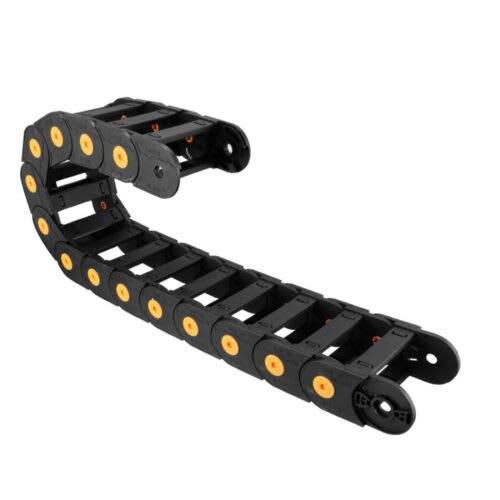
Industrial Cable Drag Chain | Flexible Wire Carrier for CNC Machinery
- Accuracy:Sub-0.003 mm

Delta VFD MS300 1.5kW 2HP 1-Phase to 3-Phase AC Drive - 7A5MS21ANSAA
- Accuracy:Sub-0.003 mm
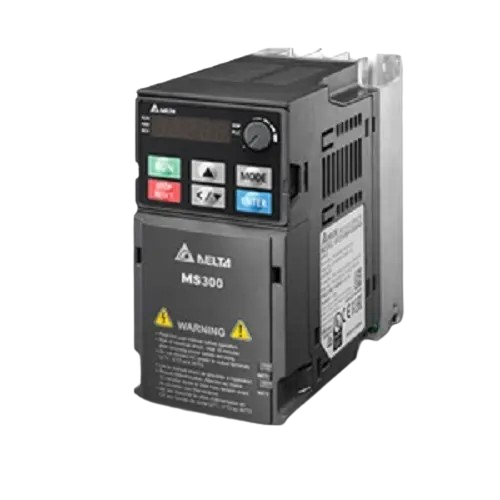
Delta VFD MS300 0.75kW 1HP 3-Phase AC Drive - 2A7MS43ANSAA
- Accuracy:Sub-0.003 mm
Delta VFD MS300 1.5kW 2HP 1-Phase to 3-Phase AC Drive - 7A5MS21ANSAA
- Accuracy:Sub-0.003 mm
Delta VFD MS300 2.2kW 3HP 1-Phase to 3-Phase AC Drive - 11AMS21ANSAA
- Accuracy:Sub-0.003 mm
Introduction
Choosing CNC cable drag chain is a practical engineering decision. The component has to fit the machine mechanically, electrically and operationally while meeting the expected production duty. This article focuses on how energy chains protect moving cables and hoses and how to size them for CNC axis travel, with a buyer-oriented workflow that can be used by CNC machine builders, maintenance teams and replacement-part buyers.
What CNC cable drag chain Does in a CNC System
- In CNC routers, laser cutters, automation equipment and moving gantries, the component contributes to machine performance through its specific function and interface. A correct selection supports predictable operation; an incorrect selection can create avoidable vibration, heat, positioning errors, downtime or premature wear.
- Treat the component as part of a system. Motor, drive, controller, mechanical structure, tooling, cooling and wiring may all affect the result.
Specifications That Should Be Compared Before Ordering
- For this component, the important checks include inner width/height; bend radius; travel length; load capacity; mounting style; separator options.
- Do not compare two products using only one number. A higher rating is not automatically better if it changes the interface, operating range, mounting dimensions or control requirements.
- For replacement work, compare the original nameplate, drawing and part number with the proposed replacement and ask the supplier to confirm compatibility in writing.
How to Select the Right Configuration
- Start with the application: CNC routers, laser cutters, automation equipment and moving gantries. Then define the machine's real operating conditions, including bundle diameter; minimum cable bend radius; travel; speed; coolant/dust environment; separation needs.
- If the application is near the upper limit of a component's rating, allow an engineering margin according to the manufacturer's recommendations rather than simply choosing the largest available model.
- For custom or retrofit machines, dimensional drawings and interface details should be approved before purchase.
Compatibility and Installation Checks
- Mechanical fit is only one part of compatibility. Check mounting pattern, shaft or taper interface, connectors, control signals, voltage, frequency, cooling, air requirements and software or parameter dependencies where applicable.
- Before commissioning, verify alignment and connections, check that moving parts have adequate clearance, and test the machine at a conservative operating condition. Record baseline temperature, vibration, runout or positioning values where those measurements are relevant.
- For safety-critical or high-speed equipment, use qualified technicians and follow the original equipment manufacturer's installation instructions.
Maintenance and Troubleshooting
- Routine care for CNC cable drag chain should include: inspect links; remove debris; check mounting; monitor cable wear; maintain correct slack.
- Common avoidable problems include overfilling chain; ignoring cable bend radius; wrong chain size; unsupported cable exits.
- When a fault appears, capture the symptom, operating condition, alarm code, recent maintenance work and measured values before changing multiple settings. This makes diagnosis more reliable and creates a useful service record.
Buyer Checklist for a Supplier Quote
- Send the machine model and application, original part number, photographs, dimensions, nameplate data and quantity required.
- Request a technical datasheet, dimensional drawing, compatibility confirmation, lead time, warranty terms and recommended installation or maintenance information.
- For imported or critical production components, also ask about replacement availability and after-sales technical support so that the initial purchase does not create a future service bottleneck.
Practical Takeaway
- The useful way to evaluate CNC cable drag chain is to match the component to the machine's actual operating envelope and interface. How energy chains protect moving cables and hoses and how to size them for cnc axis travel.
- A clear specification comparison is usually more useful than a generic list of brands or a price-only comparison.
- For a replacement request, complete compatibility information should be confirmed before the order is finalized.
Buyer Sizing & Procurement Checklist
- Machine model and application
- Original component part number
- Required dimensions and mounting pattern
- Electrical, mechanical, cooling or pneumatic ratings as applicable
- Operating speed, load and duty cycle
- Controller, drive, toolholder or connector compatibility
- Supplier datasheet and dimensional drawing
- Warranty, replacement availability and technical support
Common Selection & Integration Mistakes to Avoid
- Overfilling chain
- Ignoring cable bend radius
- Wrong chain size
- Unsupported cable exits
Frequently Asked Questions
The price of CNC cable drag chain depends on its size or power, specification, interface, brand and order quantity, so there is no single fixed price. Share your machine model, requirement and photos with TriQuench India in Ahmedabad to get a quotation and datasheet.
Engineering Conclusion & Next Steps
The right CNC cable drag chain should satisfy the application's load and speed requirements, fit the machine correctly, communicate with the surrounding system and remain serviceable over its expected duty cycle. Use the machine nameplate and drawings as the starting point, then confirm the final configuration against the supplier's technical documentation.
Need Technical Assistance Sizing Your Spindle Motor?
Share your machine model, required RPM, mounting dimensions and application with TriQuench India engineers in Ahmedabad for verified compatibility.